Reconnecting After a Busy Week: Low-Energy Rituals for Two
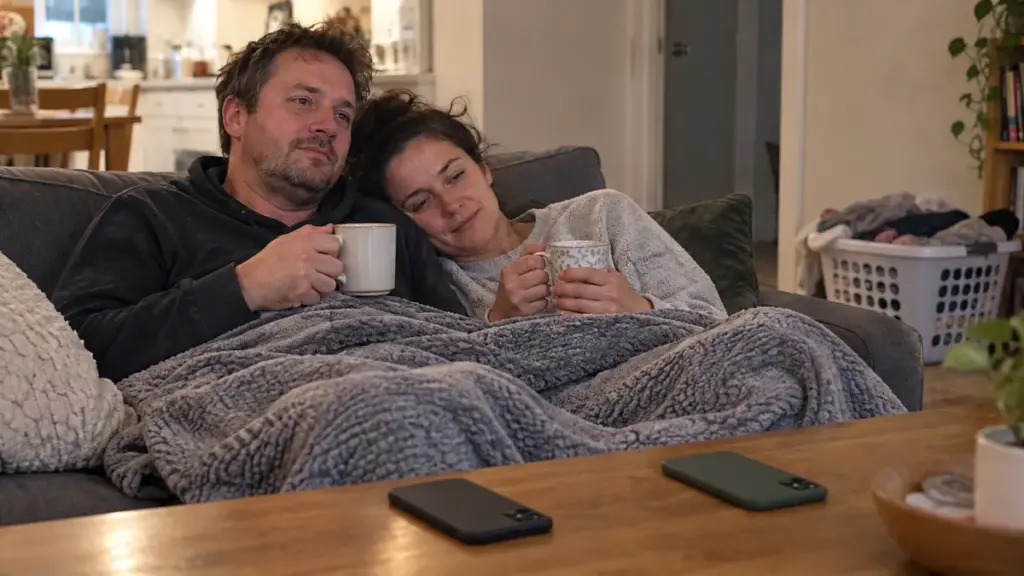

The easiest way to reconnect after a busy week is a small ritual that costs almost nothing: a 20-minute couch debrief, a slow walk, dinner with both phones in another room, or one question from a card deck. You don’t need a reservation. You need a reliable way back to each other that still works when you’re both running on fumes.
Big date nights are great. They’re also the first thing to get cancelled when Thursday runs long.
Why do small rituals beat a big date when you’re both tired?
Small rituals beat a big date on a tired week because they run on repetition, not energy. When the Gottman Institute followed up with couples from its Art and Science of Love workshop, the ones whose marriages kept improving were devoting only about six extra hours a week to the relationship. No dramatic overhaul.
The Institute’s recipe for those six hours, which you may have seen called the “magic six hours”, puts half of them into tiny daily habits:
| Habit | What it looks like | Per week |
|---|---|---|
| Partings | Learn one thing about their day before you say goodbye | 10 min |
| Reunions | A hug and kiss of at least six seconds, then a 20-minute “stress-reducing conversation” | 1 hr 40 min |
| Appreciation | Five minutes a day of saying what you admire | 35 min |
| Affection | Five minutes of cuddling or a goodnight kiss before sleep | 35 min |
| Date | One relaxed, romantic date | 2 hr |
| State of the Union | One talk about how the relationship is going | 1 hr |
There’s a second finding worth knowing. In a Gottman study of newlyweds followed up six years later, couples who were still married had turned toward each other’s small bids for attention 86% of the time, according to the Gottman Institute. Couples who divorced averaged 33%. A bid can be as small as “look at this” from the other end of the sofa. Tired weeks are exactly when those get missed.
Which low-energy rituals actually work?
The low-energy rituals that work for two tired people have a clear start, a short length and zero prep. The five below all fit in 45 minutes or less, and none of them needs a booking. Pick the one that matches how drained you are tonight, not how you wish you felt.
| Ritual | Energy | Time | Why it works | Skip it if |
|---|---|---|---|---|
| Couch debrief | Very low | 20 min | One unloads the week, the other listens and takes their side. | You need to vent about each other. Different conversation. |
| Slow walk | Low | 20 to 40 min | Side by side is easier than face to face. | It’s pouring and nobody owns a decent umbrella. |
| Phones-away dinner | Low | 30 to 45 min | Takeout counts. The point is the drawer, not the cooking. | You’re too wiped to talk. Eat, then hug. |
| One card question | Very low | 10 to 15 min | The card picks the topic, so nobody has to. | You’d draw the heaviest card at 11 p.m. |
| Long hug before sleep | Almost none | 5 min | Closeness with no talking required. | Never. This one always fits. |
On our worst weeks, Ben and I skip straight to that last row. It still counts.
How do you run a couch debrief without it turning into a fight?
A couch debrief stays calm when you agree on one rule first: this is about the week out there, not about the two of you. The Gottman Institute frames its stress-reducing conversation the same way, as a space for empathy about the stresses outside your relationship. Tuesday’s argument about the dishes can wait.
- Take turns. Ten minutes each is plenty.
- Listen before you fix. On a Friday night most people want to be heard, not coached.
- Pick a side: theirs. “Your boss said that? Unbelievable.” beats a balanced take on their manager.
- End with touch. A hug, a hand, feet in a lap.
Stuck for an opener? Borrow a light one from our conversation starter questions.

What if one of you has more energy left than the other?
When one partner has more energy left, the more tired partner should pick the ritual. That sounds unfair. It isn’t. Dragging an exhausted person into a plan they didn’t want costs more connection than it creates. The partner with energy to spare gets to order the takeout.
One trick helps: keep a menu of three rituals you both like, ranked by effort. The tired one points at a line, and nobody has to pretend to be more awake than they are. Got energy to spare on Saturday? That’s the day for our bigger date night games at home.
Where does a couples game fit on a tired night?
A couples game fits a tired night when it replaces effort instead of adding it, because the game supplies the topic and the laughs. On a wiped-out Friday, that means a deck you can open on the couch, with no setup and no rules to relearn.
A little novelty helps, too. In a 2000 paper in the Journal of Personality and Social Psychology, Arthur Aron and colleagues found across 3 lab experiments that couples who spent 7 minutes on a novel, exciting task together reported bigger gains in relationship quality than couples given a more mundane one. Novelty doesn’t have to mean skydiving.
“If you do something new and challenging, that reminds you of how exciting it can be with your partner, it makes your relationship better.”
Arthur Aron, research professor at Stony Brook University, speaking to UC Berkeley News in 2015

LOOPY was made for exactly this kind of night. LOOPY is our own 18+ card game for couples, with five decks (Talks, Fun Activities, Kisses, Fondles and a Secret deck) plus a spinner, so you decide how far the evening goes. Start in Talks when you’re wiped. Move to Kisses if the mood shifts. No setup, no score sheet. Comparing options? See our couples card games guide or the gentler question games for couples.
Your weekend reset checklist
- Pick one ritual from the table. Just one.
- Phones in another room for the first 20 minutes.
- Relationship complaints wait for another day.
- A card or question game within reach of the couch.
- A hug that lasts longer than feels normal. Six seconds is a good floor.
FAQ
How do you reconnect with your partner when you’re both exhausted?
Reconnecting with a partner when you’re both exhausted works best through a short ritual: a 20-minute talk about your week, a slow walk, or a long hug before bed.
What is a ritual of connection?
A ritual of connection is a small, repeated habit a couple uses to turn toward each other, like a goodbye kiss, a daily debrief or a Sunday walk. The Gottman Institute uses the term for moments like the six-second reunion kiss after work.
How often should couples have a date night?
The Gottman Institute’s “magic six hours” framework includes a two-hour date once a week. On busier weeks, short daily rituals fill the gap.
What are good low-energy date ideas at home?
Good low-energy date ideas at home include takeout with phones put away, a card or question game on the couch, cooking something simple together, or a hand massage while you talk.